
Ring Flying Drone Challenges Privacy and Limits of Edge Computing
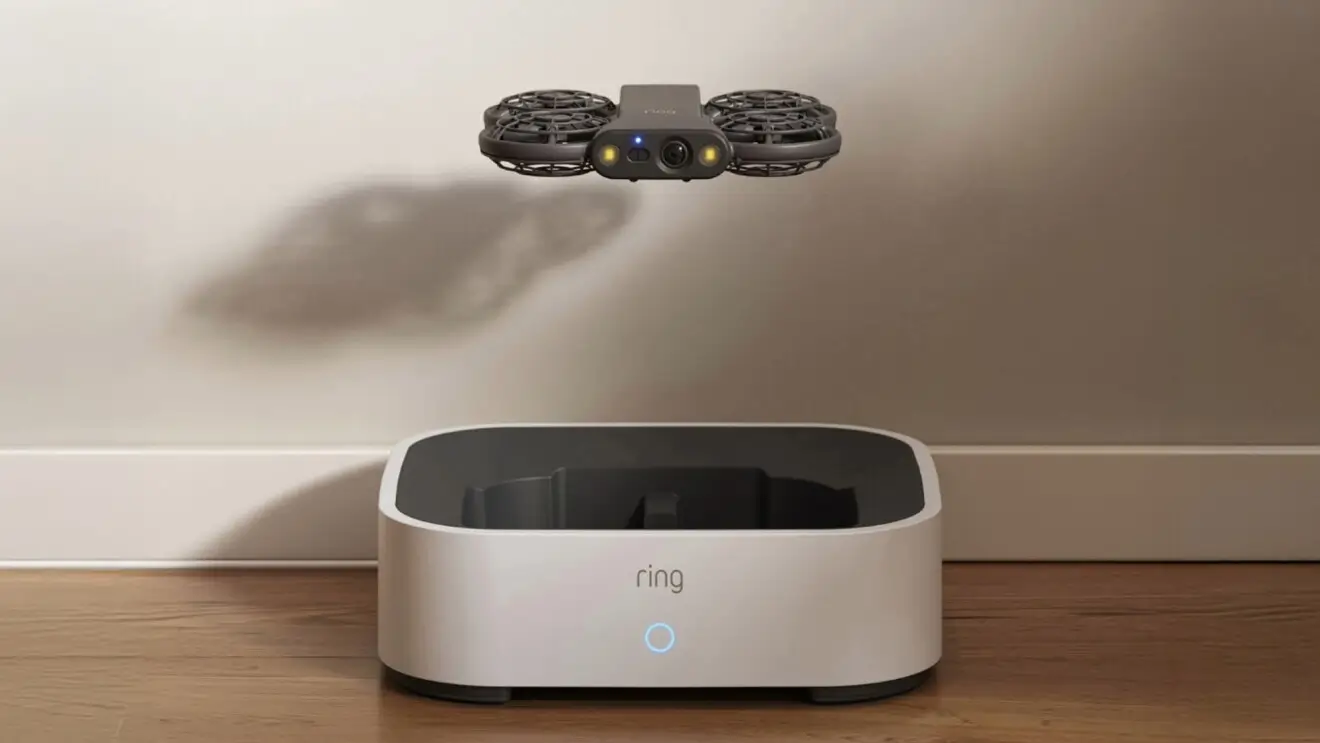
Amazon's shift from static IoT cameras to indoor spatial robotics introduces real-time on-device SLAM alongside serious domestic mapping liabilities.

SEATTLE — Amazon's commercial rollout of the Ring Robotics lineup marks a technical inflection point in premises security. Replacing stationary cameras with a $249.99 flying drone and a $999.99 mobile robot shifts smart home monitoring toward autonomous spatial computing.
The residential drone, marketed as the Ring Drone Cam, deploys to patrol rooms along pre-programmed waypoints or upon detecting unexpected motion. The hardware aims to overcome the market saturation of conventional wall-mounted cameras, which fail to eliminate blind corners without proliferating across private areas.
The Latency Bottleneck and On-Device Edge Inference
To maneuver without striking furniture or household pets, the drone executes its AI Pilot navigation stack entirely on local hardware. The sensor suite records 2K video across a 148-degree field of view with full 360-degree rotational panning.
Autonomous indoor flight mandates instantaneous computer vision inference directly on the silicon edge. Relying on continuous cloud data telemetry would introduce network latency and trigger immediate navigational collisions in dynamic domestic settings.
The fundamental physical constraint stems from battery energy density. The micro-drone sustains flight windows of only five to eight minutes before autonomously returning to its inductive charging cradle.
Volumetric 3D Mapping and Domestic Surveillance Liabilities
The tech giant also introduced the Ring Rover Cam, an autonomous wheeled ground robot engineered to patrol commercial properties spanning up to 5,000 square feet. The unit features an elevated 4K periscope camera and an integrated acoustic alarm against perimeter breaches.
The arrival of patrol robotics reignited ethical debates surrounding the digital mapping of domestic spaces. Civil liberties organization Electronic Frontier Foundation warned against the unauthorized exposure of three-dimensional floorplans.
Volumetric spatial data constitutes an entirely unprecedented class of sensitive personal data. Unlike passive snapshots from wall sensors, autonomous drones construct the exact physical geometry of household sanctuaries, creating an acute liability in the event of an infrastructure breach.
In an official response, Ring stated that the camera lens remains physically shuttered inside the charging dock. The manufacturer further noted that all recorded telemetry, navigation routes, and video streams utilize end-to-end encryption.
Source: Amazon Inc., Ring LLC, Electronic Frontier Foundation (EFF), and Giovanni Cocco
Related Stories
GTA 6 Tests Console Hardware Limits and Pressures PC Release Window
Take-Two Interactive locks in a November 2026 launch date as generative reverse engineering and unified memory constraints rewrite industry playbooks.
Magalu Jumps 11% on B3 Following Q3 Profit and Bank of America Buy Rating
The Brazilian retail powerhouse returns to profitability in the third quarter, posts double-digit sales growth in October, and receives an upgraded target price of R$ 11.